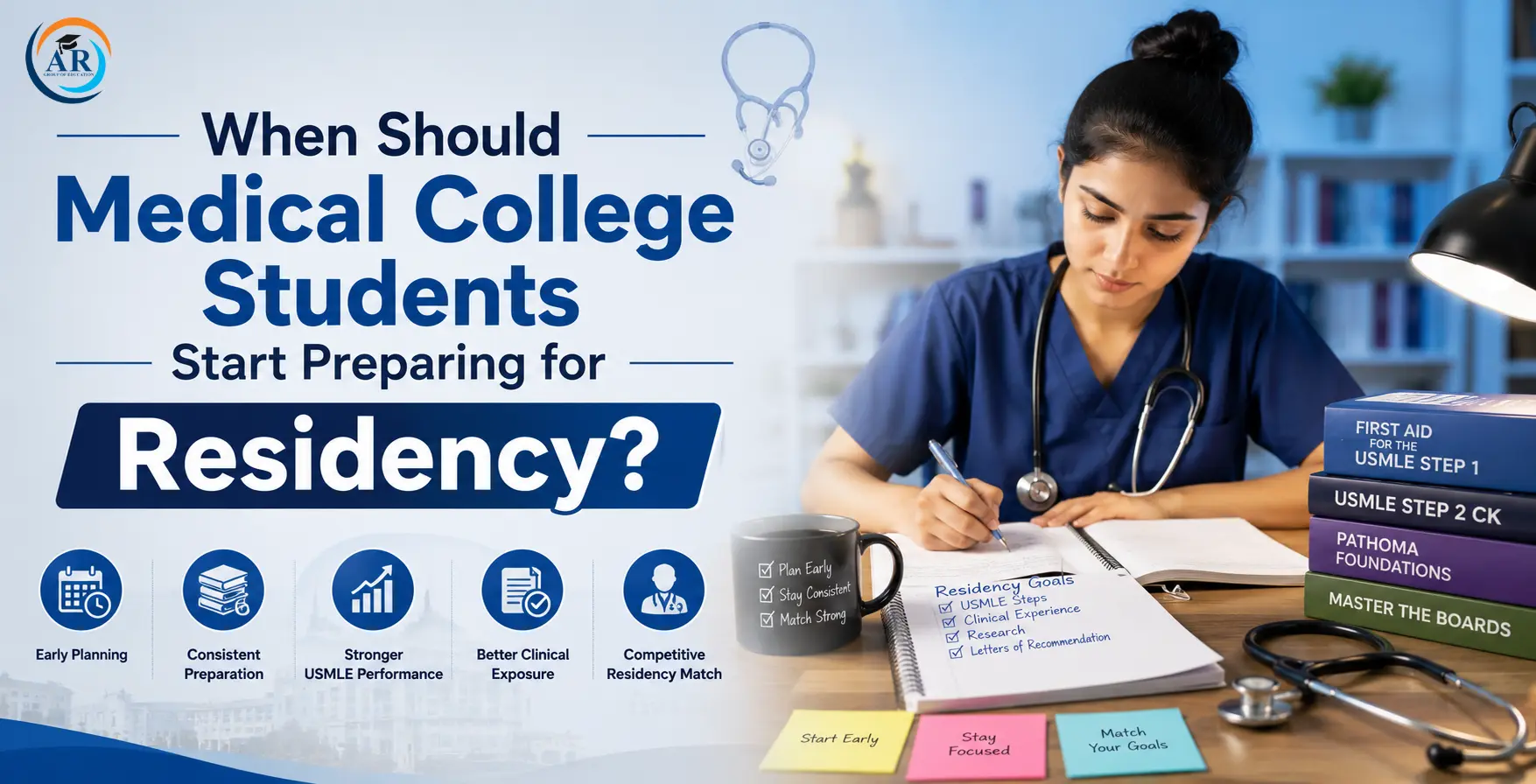
Pursuing a career in medicine isn’t limited to just completing an MBBS. The real journey begins afterward—especially when it comes to residency. Many students think residency preparation should begin during internship or in the final year of MBBS. But the truth is, the earlier you start planning for residency, the better.
Nowadays, whether you are pursuing MBBS in India or planning your long-term medical career after graduation, early preparation for residency is crucial. Residency is not just the next step, but also directly impacts your future specialization, clinical exposure, career growth, and earning potential. Therefore, Medical College Students should understand the right time to prepare for residency and how to plan it systematically.
What is Residency Preparation?
Residency preparation isn’t just about exam preparation. It includes multiple aspects such as:
- Maintaining academic performance
- Improving clinical skills
- Planning for competitive exams
- Focusing on research, publications, and internships
- Building a strong CV
- Understanding specialty choices
- Preparing for country-specific licensing pathways
This is why residency preparation is a long-term process, not a last-minute activity.
When Should Medical College Students Start Preparing for Residency?
The simple answer is: Medical College Students should start foundation-level preparation in the first year of MBBS.
But this doesn’t mean you have to spend 10–12 hours a day preparing for residency exams from the beginning. Each stage of MBBS requires a different type of preparation.
1. First Year MBBS – Foundation Building Time
In the first year, students study basic subjects such as anatomy, physiology, and biochemistry. These subjects form the basis for residency entrance exams and clinical understanding. At this stage, you should:
- Strengthen your concepts
- Maintain your notes systematically
- Understand medical terminology and clinical basics
- Develop a disciplined study routine
If you build a strong academic base in your early years, the pressure of residency preparation in later years is significantly reduced. That’s why Medical College Students should never take the first year lightly.
2. Second Year MBBS – Concept Building + Career Awareness
Second year introduces subjects like pathology, pharmacology, and microbiology, which are crucial for residency exams. At this stage, students should study with a long-term perspective, not just for passing semester exams.
In this phase, you should:
- Research residency pathways
- Explore options in India, the USA, the UK, Germany, or other countries
- Identify specialty interests
- Seek guidance from seniors and mentors
This is also the phase where Medical College Students should start understanding whether they want to practice in India, pursue a foreign residency, or keep both options open. The earlier you gain this clarity, the easier your planning becomes.
This is where the role of MBBS Admission Consultancy and career mentors can also become important, because long-term planning becomes easier with the right guidance.
3. Third Year MBBS – Best Phase to Start Strategic Preparation
If you want to pursue serious residency planning, your third year is the ideal starting point. By this time, you’ve understood the structure of medical education and can identify your strengths and weaknesses.
In the third year, you should:
- Understand the residency entrance exam pattern
- Gradually begin MCQ practice
- Take clinical postings seriously
- Improve case discussions and patient interactions
- Explore research projects or poster presentations
This phase is especially important because Medical College Students need to balance academics with career planning. By third year, preparation should become more strategic rather than casual.
4. Final Year MBBS – Focused Residency Preparation
By final year, you should have clarity about the direction you want to go in. This is the stage where casual preparation should be transformed into serious preparation.
The ideal focus in the final year should be:
- Revision of major clinical subjects
- Solving standard MCQ banks
- Reviewing previous year papers
- Taking mock tests regularly
- Shortlisting specialty preferences
- Aligning internship and exam strategy
For Medical College Students, final year is the time to build a clear roadmap for the exams and residency path they want to pursue. This clarity helps avoid confusion and delays later.
5. Internship – The Execution Phase
Many students think of internship as just a year of hospital duty, but it’s actually the most practical phase of residency preparation. During internship, you get real patient exposure, improve decision-making, and gain clinical confidence.
During internship, you should:
- Maintain a fixed daily revision schedule
- Strengthen weak subjects
- Regularly take mock tests and grand tests
- Improve documentation, communication, and case presentation skills
- Seek recommendations and career advice from mentors
For Medical College Students, internship is the stage where theory meets practice. It’s also the best time to fine-tune your preparation and improve clinical confidence before entering residency.
Why Early Residency Planning Matters for Medical College Students
Many students only start thinking about residency in the final year or internship. However, delayed preparation often leads to stress, confusion, and poor time management. On the other hand, students who start early have several advantages:
1. Better Concept Clarity
Early preparation helps you build strong subject knowledge that remains useful in entrance exams and clinical practice.
2. Less Pressure in Final Year
When you start planning from the first or second year, the final year doesn’t feel overwhelming.
3. More Time for Clinical Growth
Residency is not just about clearing an exam. Strong clinical understanding, communication skills, and patient handling are equally important.
4. Stronger CV and Profile
Students who start early can also focus on research, presentations, internships, and extracurricular medical exposure, which strengthens their overall profile.
Study MBBS in India or Abroad – Which is Better from a Residency Perspective?
This question is very common: Is it better to Study MBBS in India or abroad? The answer depends on your budget, goals, and long-term career plans. Both paths have their own advantages and challenges.
Benefits of Study MBBS in India
- Direct exposure to the Indian healthcare system
- Better understanding of PG entrance ecosystem
- Local language and patient communication advantage
- Familiarity with curriculum and exam structure
Benefits of Studying MBBS Abroad
- Affordable tuition in many countries
- Easier seat availability compared to India
- International exposure
- Broader global career opportunities
However, no matter where you study, the key point remains the same: Medical College Students must start residency preparation early and keep their roadmap clear.
Smart Tips for Residency Preparation
Whether you Study MBBS in India or plan to explore international opportunities later, these practical tips will help:
1. Start Early
Work on concept clarity from the first or second year. Last-minute preparation only adds unnecessary stress.
2. Keep a Clear Long-Term Goal
Whether you want to practice in India, target foreign residency, or plan to super-specialize, clarity is important.
3. Revise Consistently
The medical syllabus is huge, so short notes, flashcards, and revision schedules can help a lot.
4. Don’t Ignore Clinical Skills
Residency isn’t just about theory. Case-taking, diagnostic approaches, communication, and practical exposure are equally important.
5. Seek the Right Guidance
There are many MBBS Admission Consultancy options available today, but it’s important to choose trusted experts. Good Medical Admission Consultants in India can guide students through admission, career planning, country selection, and future pathways.
6. Use Expert Support When Needed
If you are planning your medical education journey or comparing options, speaking to experienced MBBS Abroad Consultants and Medical Admission Consultants in India can help you make a better-informed decision.
7. Make Career Decisions Based on Long-Term Goals
Don’t base your decisions solely on fees or location. Consider your residency plans, budget, support system, and long-term medical career goals.
Final Thoughts
In short, Medical College Students should start preparing for residency early—ideally by building a strong foundation in the initial years of MBBS and moving to a focused strategy from the third year onward. Whether you Study MBBS in India or plan your medical career through other pathways, timely preparation, regular revision, and strong clinical exposure can give you a major advantage in your residency journey. If you are looking for expert guidance for medical admissions and long-term career planning, AR Group of Education can support you from admission to your future roadmap.
FAQs
01When should Medical College Students start residency preparation exactly?
Answer: The foundation should ideally be built from the first year, but serious and structured preparation is best started from the third year of MBBS.
02Is internship enough for residency preparation?
Answer: Starting only during internship may be a bit late. Internship is the best phase for revision and execution, but preparation should ideally begin before that.
03Is it better to Study MBBS in India or abroad for residency?
Answer: This depends on your budget, career goals, seat availability, and future residency plans. Both options can be good if planned properly.
04What is the role of MBBS Admission Consultancy?
Answer: A good MBBS Admission Consultancy can guide students in college selection, admission process, documentation, and long-term medical career planning.
05How do Medical Admission Consultants in India help students?
Answer: Experienced Medical Admission Consultants in India help students compare options, understand admission procedures, and make informed decisions for their medical career.
06Can MBBS Abroad Consultants help with long-term career planning?
Answer: Yes, experienced MBBS Abroad Consultants can help students understand international education options, future opportunities, and the broader medical career roadmap.
Need guidance?
Expert MBBS counselling, India & Abroad
College shortlisting, fees, NEET eligibility, and documentation support.