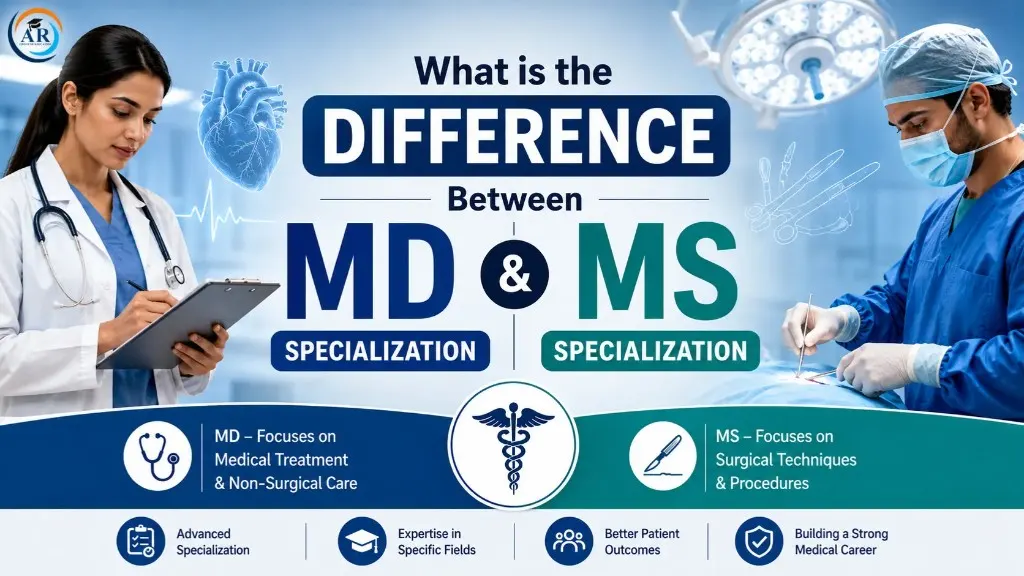
After completing MBBS, many medical graduates start planning their postgraduate education. Two of the most popular postgraduate medical degrees in India are MD (Doctor of Medicine) and MS (Master of Surgery). Although both are postgraduate medical qualifications, they differ significantly in terms of specialization, training, career opportunities, and the type of medical work involved. Understanding the difference between MD and MS specialization is important for MBBS graduates who are deciding which postgraduate path suits their interests, skills, and long-term career goals. What is MD? MD stands for Doctor of Medicine. It is a postgraduate medical degree primarily focused on non-surgical and clinical specialties. During an MD program, doctors receive advanced training in diagnosing diseases, managing medical conditions, prescribing treatments, and providing comprehensive patient care. Some popular MD specializations in India include:
- MD General Medicine
- MD Pediatrics
- MD Dermatology
- MD Psychiatry
- MD Radiodiagnosis
- MD Anesthesiology
- MD Pathology
- MD Respiratory Medicine
- MD Pharmacology
- MD Microbiology
The exact duration and curriculum can vary according to the specialty and applicable regulations. What is MS? MS stands for Master of Surgery. It is a postgraduate medical degree focused primarily on surgical specialties. MS students receive extensive practical and clinical training in surgical procedures, patient management, diagnosis, and perioperative care. Popular MS specializations include:
- MS General Surgery
- MS Orthopaedics
- MS Obstetrics and Gynaecology
- MS ENT
- MS Ophthalmology
The MS pathway is generally suitable for medical graduates who have a strong interest in surgical procedures and hands-on clinical work. Difference Between MD and MS Specialization The major difference between MD and MS specialization is the nature of medical training. MD programs generally focus on the diagnosis and medical management of diseases, whereas MS programs emphasize surgical treatment and operative procedures. Feature MD MS Full Form Doctor of Medicine Master of Surgery Main Focus Medical and clinical management Surgical management Training Diagnosis, treatment and patient management Surgical procedures and operative care Suitable For Students interested in medicine and clinical specialties Students interested in surgery
| Common Specialties | |
|---|---|
| Medicine, Pediatrics, Dermatology, Psychiatry | General Surgery, Orthopaedics, ENT |
| Work Style | More consultation and medical management |
| More procedures and surgical intervention | Career Options |
| Physician, specialist, consultant, academician | Surgeon, specialist, consultant, academician |
MD vs MS: Which One Should You Choose? Choosing between MD and MS depends largely on your interests and career goals. If you enjoy diagnosing complex medical conditions, managing patients through medication and long-term treatment, and working primarily in clinical medicine, an MD specialization may be more suitable. On the other hand, if you enjoy practical procedures, surgical techniques, operating-room environments, and solving medical problems through surgery, MS may be a better option. Therefore, the difference between MD and MS specialization should not be viewed simply as a difference in degree names. The two pathways can lead to very different professional experiences and day-to-day responsibilities. Admission Process for MD and MS Admission to postgraduate medical courses in India generally requires candidates to complete their MBBS degree and satisfy the applicable eligibility criteria. For postgraduate medical admissions, candidates typically need to qualify for NEET PG and participate in the applicable counselling process. The NEET PG Counselling process involves choice filling, seat allotment, and reporting according to the applicable admission rules. Candidates should carefully review the latest official notifications before applying. Candidates should always check the latest official notifications and counselling guidelines before applying because admission procedures, eligibility requirements, and examination rules can change. For students who need help understanding eligibility, college options, counselling procedures, and admission requirements, professional Medical Admission Guidance can make the postgraduate admission process easier to understand. MD Specializations and Career Opportunities MD offers a wide range of career opportunities across different clinical and non-clinical areas. For example, an MD in General Medicine can work as a physician and may later pursue super-specialization. An MD in Dermatology can build a career in clinical dermatology, aesthetic medicine, or academics. Similarly, MD specialists in Pediatrics, Psychiatry, Radiodiagnosis, and other disciplines can work in hospitals, clinics, medical colleges, diagnostic centres, research institutions, and other healthcare organizations. The career scope depends heavily on the chosen specialization, skills, experience, location, and further qualifications. MS Specializations and Career Opportunities MS graduates generally pursue careers that involve surgical and procedural care. Depending on their specialization, they may work in areas such as general surgery, orthopaedics, ENT, ophthalmology, or obstetrics and gynaecology. After completing MS, doctors can work in hospitals, surgical centres, medical colleges, and private practice. They can also pursue further training or super-specialization depending on their chosen field and eligibility. MD vs MS: Which One Should You Choose? Choosing between MD and MS depends largely on your interests and career goals. If you enjoy diagnosing complex medical conditions, managing patients through medication and long-term treatment, and working primarily in clinical medicine, an MD specialization may be more suitable. On the other hand, if you enjoy practical procedures, surgical techniques, operating-room environments, and solving medical problems through surgery, MS may be a better option. Therefore, the difference between MD and MS specialization should not be viewed simply as a difference in degree names. The two pathways can lead to very different professional experiences and day-to-day responsibilities. Admission Process for MD and MS Admission to postgraduate medical courses in India generally requires candidates to complete their MBBS degree and satisfy the applicable eligibility criteria. For postgraduate medical admissions, candidates typically need to qualify for the relevant postgraduate medical entrance examination and participate in the applicable counselling process. Seat allotment depends on factors such as rank, category, preferences, seat availability, and admission rules. Candidates should always check the latest official notifications and counselling guidelines before applying because admission procedures, eligibility requirements, and examination rules can change. MD Specializations and Career Opportunities MD offers a wide range of career opportunities across different clinical and non-clinical areas. For example, an MD in General Medicine can work as a physician and may later pursue super-specialization. An MD in Dermatology can build a career in clinical dermatology, aesthetic medicine, or academics. Similarly, MD specialists in Pediatrics, Psychiatry, Radiodiagnosis, and other disciplines can work in hospitals, clinics, medical colleges, diagnostic centres, research institutions, and other healthcare organizations. The career scope depends heavily on the chosen specialization, skills, experience, location, and further qualifications. MS Specializations and Career Opportunities MS graduates generally pursue careers that involve surgical and procedural care. Depending on their specialization, they may work in areas such as general surgery, orthopaedics, ENT, ophthalmology, or obstetrics and gynaecology. After completing MS, doctors can work in hospitals, surgical centres, medical colleges, and private practice. They can also pursue further training or super-specialization depending on their chosen field and eligibility. Difference Between MD and MS Specialization in Career Scope Another important difference between MD and MS specialization is the type of career environment graduates may experience. MD specialists often spend significant time consulting with patients, interpreting investigations, developing treatment plans, monitoring disease progression, and managing chronic conditions. MS specialists may spend more time performing procedures, assisting or conducting surgeries, managing surgical patients, and handling postoperative care. However, the actual work pattern varies significantly depending on the specialization and workplace. Difference Between MD and MS Specialization in Work Profile The work profile is another factor students should consider before selecting a postgraduate degree. An MD career can involve:
- Patient consultations
- Disease diagnosis
- Medical treatment
- Interpretation of investigations
- Long-term patient management
- Clinical research and academics
An MS career can involve:
- Preoperative evaluation
- Surgical procedures
- Emergency surgeries
- Postoperative management
- Procedural training
- Surgical research and academics
This practical difference between MD and MS specialization can help students understand which working style aligns better with their personality and professional interests. Difference Between MD and MS Specialization in Specialties MD and MS cover different groups of postgraduate specialties. MD generally includes specialties centered around medical diagnosis and treatment, while MS is primarily associated with surgical disciplines. For example, a student interested in treating skin conditions may consider MD Dermatology, whereas a student interested in surgical correction of musculoskeletal conditions may consider MS Orthopaedics. When comparing colleges, students should evaluate faculty, clinical exposure, infrastructure, fees, location, and specialization before deciding on the best MD/MS college in India for their goals. Can MD and MS Doctors Pursue Super-Specialization? Yes, postgraduate doctors can pursue further qualifications depending on their specialization and eligibility. MD graduates may pursue super-specialty pathways such as DM in eligible disciplines, while MS graduates may pursue MCh or other advanced surgical training options where applicable. The available pathways depend on the candidate's postgraduate specialty and the current admission regulations. Which is Better: MD or MS? There is no universal answer to whether MD or MS is better. Both are respected postgraduate medical pathways, but they suit different professional interests. MD may be preferable for students who enjoy:
- Clinical diagnosis
- Medical management
- Patient consultations
- Non-surgical treatment
- Long-term disease management
MS may be preferable for students who enjoy:
- Surgery
- Hands-on procedures
- Operating-room work
- Emergency interventions
- Surgical patient management
Therefore, the difference between MD and MS specialization should be evaluated according to your interests rather than choosing a degree solely based on perceived salary or popularity. MD vs MS: Salary and Growth Salary after MD or MS depends on multiple factors, including specialization, experience, location, type of hospital, professional skills, and whether the doctor works in private practice or an institution. Certain MD specialties may offer strong opportunities in outpatient care, diagnostics, and specialized clinical services. MS specialties can offer significant opportunities in surgical practice and hospital-based care. Rather than comparing only starting salaries, students should consider long-term career growth, specialization demand, lifestyle, work environment, and opportunities for further education. How to Decide Between MD and MS After MBBS? Before making a decision, MBBS graduates should consider the following:
- Identify your interest: Decide whether you prefer medical management or surgical procedures.
- Understand the specialty: Research the actual daily responsibilities associated with your preferred specialty.
- Consider work-life preferences: Different specialties can involve different working hours, emergency duties, and workloads.
- Evaluate career opportunities: Consider hospitals, private practice, academics, research, and further specialization.
- Review admission requirements: Check the latest official postgraduate admission rules.
- Consider long-term goals: Think about where you want your medical career to be in the next 5–10 years.
Students planning MD/MS admission in India should also compare colleges and specializations carefully before filling their choices. Reviewing admission criteria, available seats, fees, clinical exposure, and career opportunities can help candidates make a more informed decision. Conclusion Choosing a postgraduate medical specialty is one of the most important decisions after MBBS. MD and MS both offer rewarding career opportunities, but their training and professional responsibilities are different. Students should not select a postgraduate course simply because a particular specialty is popular. Instead, they should consider their interests, aptitude, preferred work environment, career goals, and willingness to handle the responsibilities associated with the specialty. Taking proper Medical Admission Guidance can also help students understand their options and make a more informed decision. AR Group of Education helps medical aspirants understand postgraduate medical education pathways, counselling procedures, and college options so they can make informed decisions about their MD/MS journey.
Frequently Asked Questions
01What is the main difference between MD and MS?
MD primarily focuses on medical and clinical specialties, while MS mainly focuses on surgical specialties and operative training.
02Is MD better than MS?
Neither degree is universally better. The right choice depends on whether a student prefers clinical medicine or surgery.
03Can an MBBS graduate pursue both MD and MS?
A candidate generally chooses one postgraduate specialty at a time. After completing the required postgraduate qualification, further specialization may be possible depending on eligibility and regulations.
04Which has more career opportunities, MD or MS?
Both offer broad career opportunities. Career prospects depend largely on the chosen specialty, experience, location, and professional goals.
05Can MD doctors perform surgeries?
Some MD specialties involve procedures, but major surgical training is generally associated with surgical postgraduate specialties such as MS.
06Can MS doctors work in private hospitals?
Yes. MS graduates can work in private hospitals, government hospitals, surgical centres, medical colleges, and private practice, depending on their specialty and applicable requirements.
07What should I consider before choosing MD or MS?
Consider your interest in clinical medicine versus surgery, preferred work environment, lifestyle, career goals, specialty demand, and opportunities for further specialization.
Need guidance?
Expert MBBS counselling, India & Abroad
College shortlisting, fees, NEET eligibility, and documentation support.