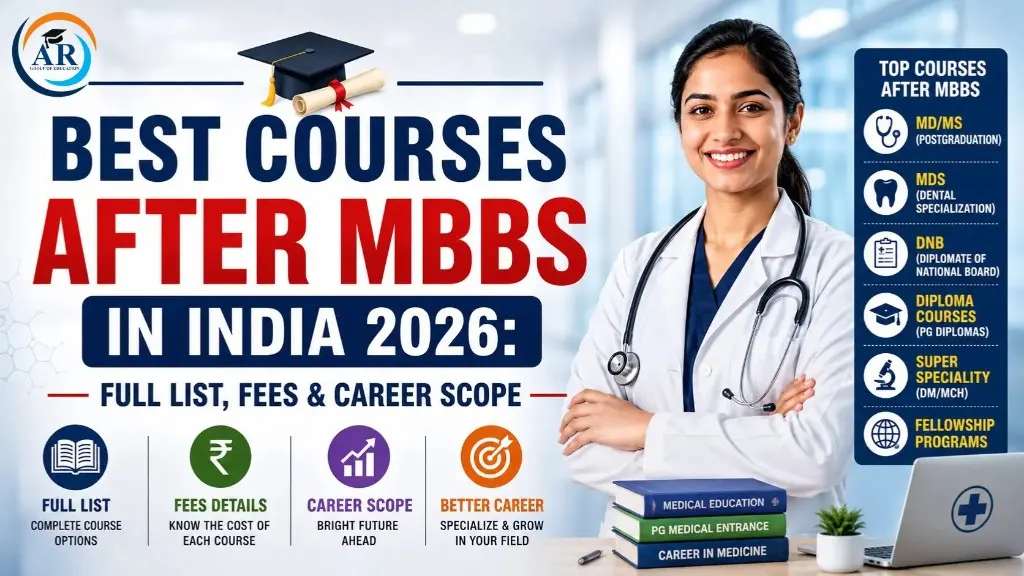
Completing MBBS is a major milestone, but for many medical graduates, it is only the beginning of their professional journey. After MBBS, students can choose from several postgraduate, super-specialty, clinical, non-clinical, research, public health, and management-oriented career paths. The right choice depends on your career goals, preferred specialty, interest in patient care, and long-term earning potential. Choosing among the Best Courses After MBBS in India requires an understanding of the course duration, admission requirements, approximate fees, career opportunities, and scope after completion. While MD and MS remain the most popular postgraduate choices, options such as DNB, PG Diploma, MPH, MBA in Healthcare Management, clinical fellowships, and research programmes can also be considered. This guide covers the major courses available after MBBS in India in 2026, along with their eligibility, duration, fees, career scope, and important admission considerations. What Are the Courses Available After MBBS in India? After completing MBBS, medical graduates have multiple options depending on whether they want to continue in clinical practice, move into surgery, pursue research, enter healthcare management, or specialise in a particular area. The major Best Courses After MBBS in India include: Course/Programme Typical Duration Main Focus MD 3 years Medical and clinical specialties MS 3 years Surgical specialties DNB 3 years Broad specialty medical training PG Diploma 2 years Specialty-focused postgraduate training DM 3 years after MD/DNB Super-specialty medicine MCh 3 years after MS/DNB Super-specialty surgery MPH 1–2 years Public health and epidemiology MBA Healthcare Management 1–2 years Healthcare administration and management Clinical Fellowship Varies Advanced practical/clinical training Medical Research Programmes Varies Research and academics
The availability, eligibility, admission process, and fees vary by institution and programme. Students should always verify the latest requirements with the concerned university, counselling authority, or regulatory body before applying. What Should I Do After Completing MBBS? When choosing between medical and surgical postgraduate pathways, students should understand the difference between MD and MS specialization. MD generally focuses on non-surgical clinical specialties, while MS is designed for surgical disciplines. Your choice should depend on your interests, aptitude, and preferred career path.
Pursue MD
MD is one of the most preferred postgraduate options for MBBS graduates who want to specialise in non-surgical medical fields. Common specialties include:
- MD General Medicine
- MD Paediatrics
- MD Dermatology
- MD Psychiatry
- MD Radiodiagnosis
- MD Anaesthesiology
- MD Respiratory Medicine
- MD Pathology
- MD Pharmacology
- MD Community Medicine
MD generally involves three years of postgraduate training. Fees can vary significantly between government and private institutions.
Pursue MS
MS is designed for students interested in surgical specialties. Popular branches include:
- MS General Surgery
- MS Orthopaedics
- MS Obstetrics and Gynaecology
- MS ENT
- MS Ophthalmology
Students receive extensive clinical and procedural training during the programme.
Choose DNB
Diplomate of National Board (DNB) is another major postgraduate pathway after MBBS. It is offered in broad specialties and is an important alternative to MD/MS. DNB training is conducted at institutions accredited by the National Board of Examinations in Medical Sciences (NBEMS). The programme structure and training requirements depend on the specialty.
Consider PG Diploma Courses
Postgraduate diploma courses can provide focused specialty training within a shorter duration than traditional three-year MD/MS programmes. However, availability and recognition of individual diploma programmes should be checked carefully before admission.
Explore Public Health
Students who are interested in healthcare at the population level can consider an MPH or related public health programme. Career opportunities may include:
- Public health organisations
- Government health programmes
- NGOs
- Epidemiology
- Health research
- International health organisations
- Healthcare consulting
Move Into Healthcare Management
An MBA in Healthcare Management or Hospital Management can be suitable for MBBS graduates who are interested in administration, hospital operations, healthcare consulting, health-tech, and leadership roles rather than conventional clinical practice.
Pursue Research and Academics
MBBS graduates interested in medical research can explore research-oriented programmes, clinical research, epidemiology, medical writing, pharmacovigilance, and academic careers. Is MD/MS Compulsory After MBBS, or Are There Other Options? No, MD or MS is not compulsory for every MBBS graduate. MD/MS is generally preferred if your goal is to become a specialist in a particular clinical or surgical branch. However, an MBBS graduate can also explore several other career paths. These include:
Therefore, the Best Courses After MBBS in India depend largely on your individual career objectives rather than simply choosing the most popular programme. Can I Pursue a PG Course After MBBS Without NEET PG? Yes, but it depends on the course and admission route. For students planning MD/MS admission in India, understanding the applicable entrance examination, eligibility requirements, counselling procedure, choice filling, seat allotment, and reporting requirements is essential. Candidates should always follow the latest official admission guidelines. However, not every programme after MBBS follows the same admission process. Courses such as MPH, MBA in Healthcare Management, certain research programmes, and some fellowship or certificate programmes may have separate admission criteria. Students should therefore distinguish between medical postgraduate degree programmes and other postgraduate courses before assuming that NEET PG is required for every option. Best PG Courses After MBBS in India Students should also research institutions carefully before selecting a postgraduate programme. Factors such as clinical exposure, faculty, infrastructure, patient load, academic environment, fees, and placement or career opportunities can help students identify the best MD/MS college in India for their preferred specialty.
Some popular PG choices include: PG Specialty
| Broad Career Area | |
|---|---|
| Career Scope | MD General Medicine |
| Clinical medicine | Hospitals, clinics, further super-specialisation |
| MD Radiodiagnosis | Diagnostic imaging |
| Hospitals, diagnostic centres, private practice | MD Dermatology |
| Skin and aesthetic medicine | Clinics, hospitals, aesthetic practice |
| MD Paediatrics | Child healthcare |
| Hospitals, clinics, paediatric practice | MS Orthopaedics |
| Musculoskeletal surgery | Hospitals, trauma centres, private practice |
| MS General Surgery | Surgical care |
| Hospitals, surgical practice, super-specialisation | MS Obstetrics & Gynaecology |
| Women's healthcare | Hospitals, clinics, maternity care |
| MD Anaesthesiology | Anaesthesia & critical care |
| Hospitals, ICUs, operation theatres | MD Psychiatry |
| Mental healthcare | Hospitals, clinics, mental health centres |
The best specialty is not necessarily the one with the highest salary. Students should also consider work-life balance, patient interaction, procedural exposure, competition, location, academic interests, and opportunities for further specialisation. Which PG Course After MBBS Has the Highest Salary Potential? There is no fixed answer because income depends on several factors, including specialty, experience, location, type of employment, private practice, procedures performed, and additional qualifications. Specialties such as radiology, dermatology, orthopaedics, general medicine, surgery, and certain super-specialties can offer strong earning potential. However, salary expectations should not be the only factor when selecting a specialty. For example, a specialist with strong clinical skills and an established private practice may earn considerably more than someone working only in a salaried position. Similarly, doctors who complete DM or MCh may develop highly specialised career opportunities. Therefore, when comparing the Best Courses After MBBS in India, consider both financial potential and long-term professional suitability. What Is the Difference Between MD, MS, DNB, and Diploma Courses After MBBS? Understanding the difference between these qualifications is essential before selecting a postgraduate pathway. MD – Doctor of Medicine MD is a postgraduate medical degree generally focused on non-surgical clinical specialties. Duration: Usually 3 years Focus: Medical and clinical management Examples: General Medicine, Paediatrics, Dermatology, Psychiatry MS – Master of Surgery MS is a postgraduate degree focused primarily on surgical specialties. Duration: Usually 3 years Focus: Surgical diagnosis and treatment Examples: General Surgery, Orthopaedics, ENT, Ophthalmology DNB – Diplomate of National Board DNB is a postgraduate medical qualification awarded through NBEMS-accredited training programmes. Duration: Generally 3 years for broad specialty programmes Focus: Specialty-based postgraduate medical training Examples: DNB General Medicine, DNB Paediatrics, DNB Radiodiagnosis PG Diploma A postgraduate diploma offers specialty-focused training and may have a shorter duration than MD/MS, depending on the programme. Duration: Often around 2 years Focus: Specific medical specialty Important: Availability and recognition should be checked for the specific course and institution. Can I Pursue Super-Specialty DM/MCh Directly After MBBS? Generally, students cannot enter the conventional DM/MCh super-specialty pathway directly after MBBS. Super-specialty medical education usually requires prior postgraduate training in a relevant broad specialty.
For example: MBBS → MD/DNB → DM and MBBS → MS/DNB → MCh
Examples of super-specialties include:
- DM Cardiology
- DM Neurology
- DM Gastroenterology
- DM Endocrinology
- MCh Neurosurgery
- MCh Cardiothoracic and Vascular Surgery
- MCh Urology
- MCh Plastic Surgery
- MCh Paediatric Surgery
The exact eligibility requirements can differ by specialty and admission system, so candidates should check the latest official regulations before applying. Course Fees After MBBS in India Fees vary widely based on the course, institution, state, and whether the college is government or private.
| Course — Approximate Fee Range | |
|---|---|
| MD/MS – Government | Relatively low compared with private institutions |
| MD/MS – Private | Can range from several lakhs to substantially higher amounts |
| DNB | Varies by institution and programme |
| PG Diploma | Varies by specialty and institution |
| MPH | Approximately ₹1–5 lakh in many institutions |
| MBA Healthcare Management | Approximately ₹2–10+ lakh |
| Clinical Fellowship | Varies significantly |
How to Choose the Right Course After MBBS? Students planning postgraduate medical education should also understand the NEET PG counselling process, as counselling plays an important role in seat selection and admission to eligible postgraduate medical programmes. Before participating, candidates should review the available seats, fee structure, college preferences, and applicable counselling rules. 1. Do I want a clinical or non-clinical career? If you enjoy direct patient care, clinical MD/MS or DNB specialties may be suitable. If you prefer research, administration, public health, or healthcare management, other programmes may be more appropriate. 2. Do I enjoy surgery? If you enjoy procedures and operating-room work, MS and relevant surgical specialties may be worth considering. 3. Do I want to super-specialise? If your long-term goal is cardiology, neurology, gastroenterology, neurosurgery, or another super-specialty, plan your postgraduate pathway accordingly. 4. What type of lifestyle do I prefer? Different specialties have different working hours, emergency responsibilities, patient loads, and procedural demands. 5. What is my budget? Government, private, deemed, and other institutions can have very different fee structures. Compare the total cost rather than tuition alone. 6. What are my long-term career goals? Think beyond your first postgraduate qualification. Consider whether you want to work in a hospital, establish a clinic, enter academics, conduct research, join healthcare management, or pursue super-specialisation. Career Options After MBBS Without MD/MS Although several alternative career paths are available after MBBS, students who want to pursue clinical postgraduate specialisation should carefully understand NEET PG eligibility and admission requirements before planning their next academic step. Some options include:
These options can be particularly relevant for graduates who want to enter the healthcare industry without spending several additional years pursuing a clinical specialty. Why Choosing the Right Course Matters The decision you make after MBBS can influence your professional identity, work environment, earning opportunities, and future specialisation options. There is no universally superior course for every medical graduate. For some students, MD or MS may be the ideal route. Others may prefer DNB, public health, healthcare management, research, or a different professional pathway. The Best Courses After MBBS in India should therefore be selected by considering your aptitude, specialty preference, financial situation, admission requirements, and long-term career plans. Conclusion Completing MBBS opens the door to several career pathways in medicine and healthcare. Students can pursue MD, MS, DNB, PG Diploma, super-specialty training after the required postgraduate qualification, public health, healthcare management, research, or other specialised programmes. AR Group of Education helps medical aspirants understand different postgraduate and career options so they can make informed decisions after MBBS. The Best Courses After MBBS in India are not determined by salary or popularity alone. A suitable course should match your interests, skills, career ambitions, preferred work environment, and financial plans.
Frequently Asked Questions
01What are the best courses after MBBS in India?
Popular options include MD, MS, DNB, PG Diploma, and later DM/MCh super-specialisation. Students can also consider MPH, MBA Healthcare Management, clinical research, and other healthcare programmes.
02Is MD/MS compulsory after MBBS?
No. MD/MS is not compulsory for every MBBS graduate. The appropriate pathway depends on your career goals.
03Can I study after MBBS without NEET PG?
Some postgraduate programmes outside conventional medical MD/MS pathways may have their own admission criteria. However, candidates seeking mainstream postgraduate medical specialities must follow the applicable entrance and counselling requirements.
04Which course after MBBS has the highest salary?
Earning potential varies by specialty, experience, location, employment type, and private practice. Certain clinical and super-specialty fields can offer strong earning potential.
05Is DNB equivalent to MD/MS?
DNB is a recognised postgraduate medical qualification, but its admission, training, examination, and institutional structure differ from MD/MS. Candidates should check current regulatory provisions for the specific specialty.
06Can I do DM or MCh immediately after MBBS?
For the conventional super-specialty pathway, students generally need an appropriate postgraduate qualification such as MD/DNB or MS/DNB before pursuing DM/MCh, depending on the specialty and applicable rules.
Need guidance?
Expert MBBS counselling, India & Abroad
College shortlisting, fees, NEET eligibility, and documentation support.